Architecture on seven centimetres
FOR SCIENCE CENTRES AND EDUCATIONAL VENUES
We design souvenirs for places where a visit ends in knowledge, not just a view. An exhibit, an experiment or the patron of the institution in a tactile relief – a design that reminds a child at home what they learned there.
We write about the technology itself - the relief, the UV print and how an order runs - on the 3D UV magnets page. Projects for other kinds of sites are collected in our portfolio.
An educational venue sells a souvenir in a different situation from a tourist attraction. The buyer – often a teacher or a parent – judges it by whether it leaves anything behind. That changes three things in the design.
A science centre is rarely remembered through its architecture. What sticks is the pendulum you set swinging, the prism splitting light or the image in a telescope. A design showing only the building misses what people came for.
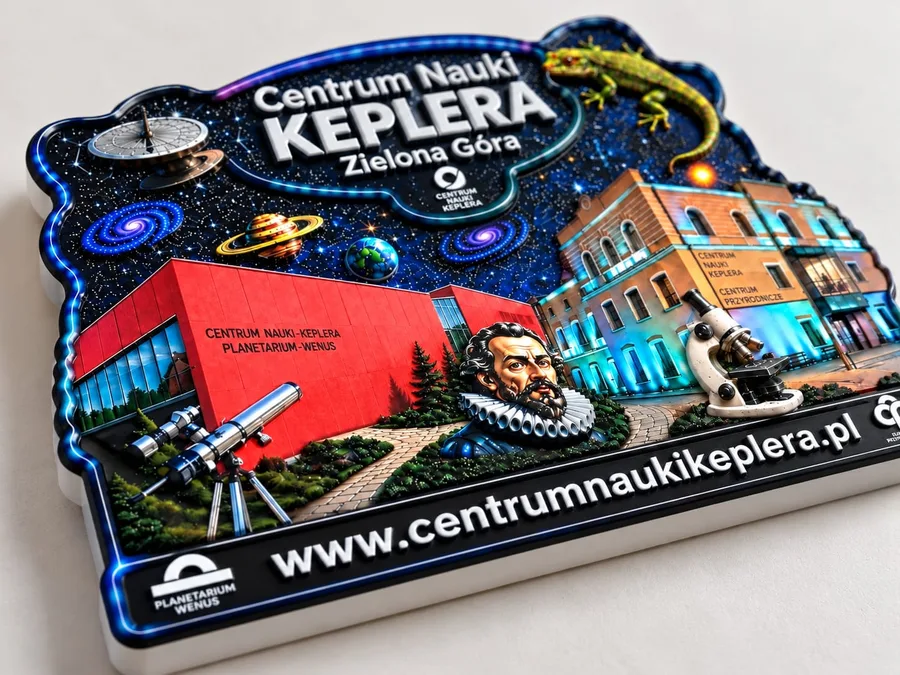
A souvenir from an educational venue goes on the fridge at home, but also on a classroom board and a teacher’s desk. There someone reads it up close and writes the name down. So the lettering and the web address have to survive being looked at from twenty centimetres, not just from two metres.
Besides retail sales, souvenirs from science centres go out as gifts for groups, competition prizes or part of a school package. That recipient looks at the design differently: it has to be presentable and giftable, not just tempting at the till.
An educational venue usually has more content than fits on a single magnet. These four questions help decide what stays and what gives way.
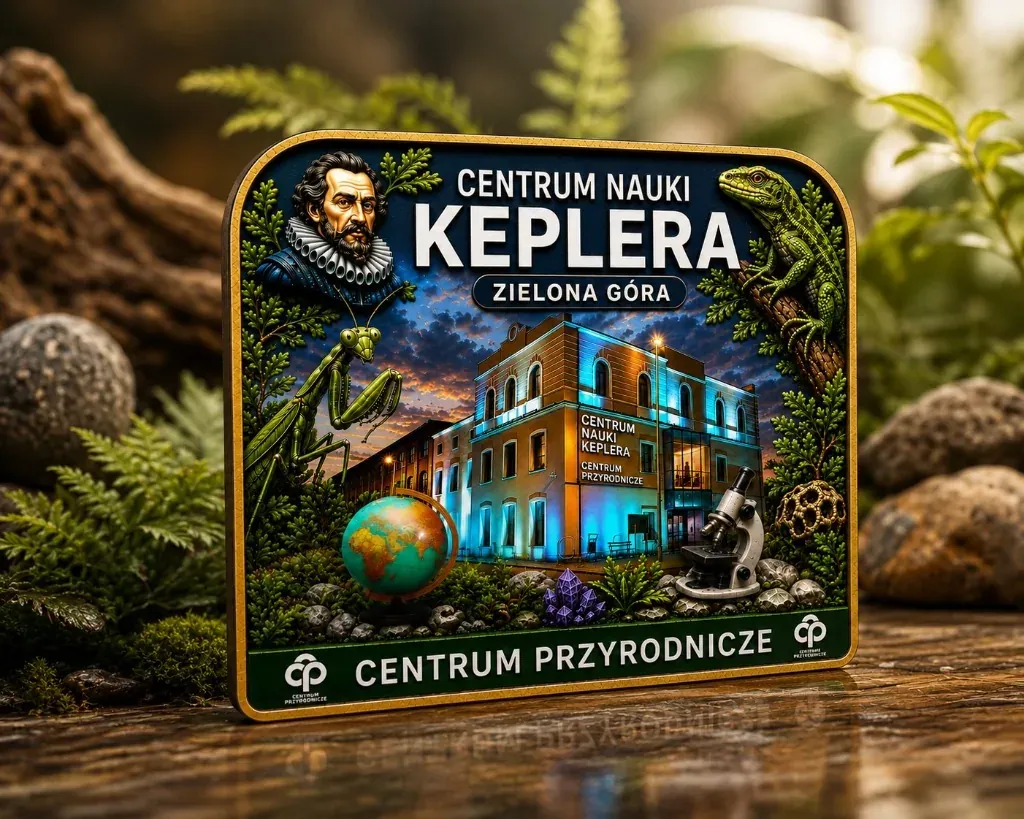
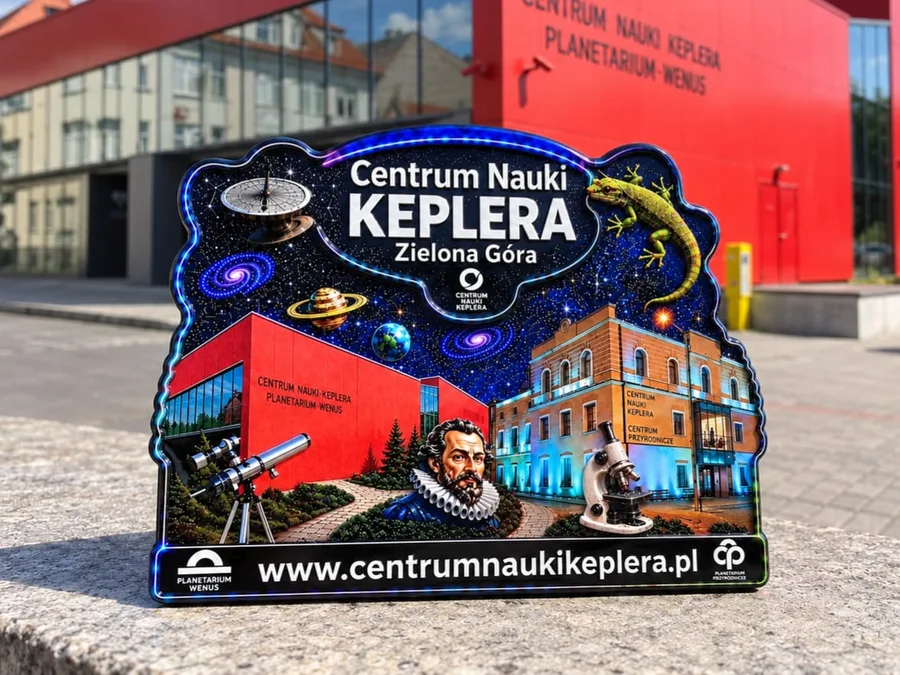
A building works when it is recognisable on its own. An exhibit reaches those who came for a specific experiment. A patron – Kepler, Newton, Copernicus – gives a face and an instant association with a field. On the Centrum Nauki Keplera magnet all three fitted, but that is the exception, not the rule.
A venue divided into departments – a planetarium, a nature section, workshops – can have a design for each. A visitor then picks the one they spent most time in, and a school can buy the set as prizes. With one design everything rests on a single decision.
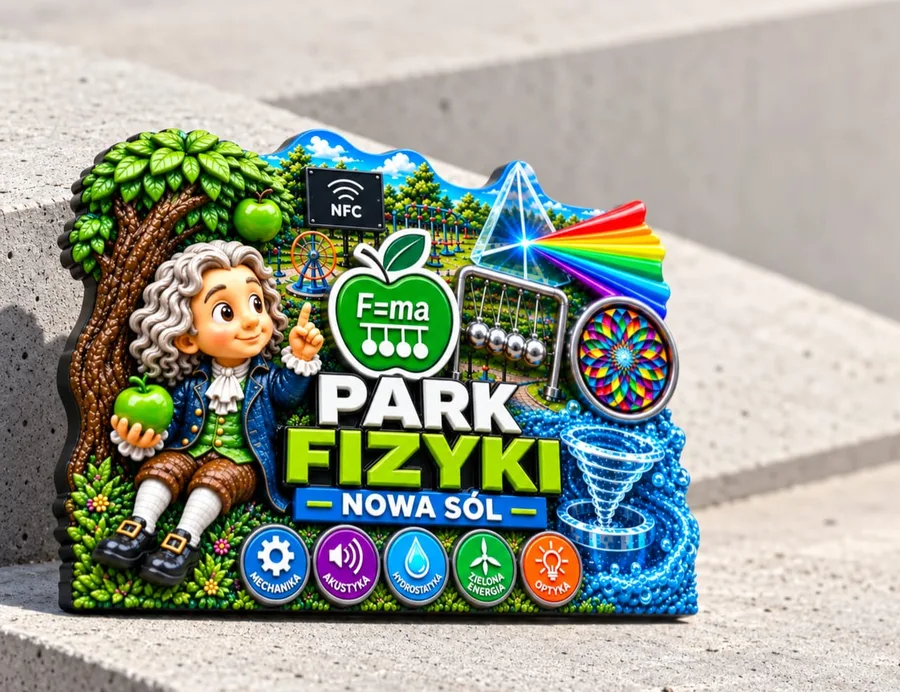
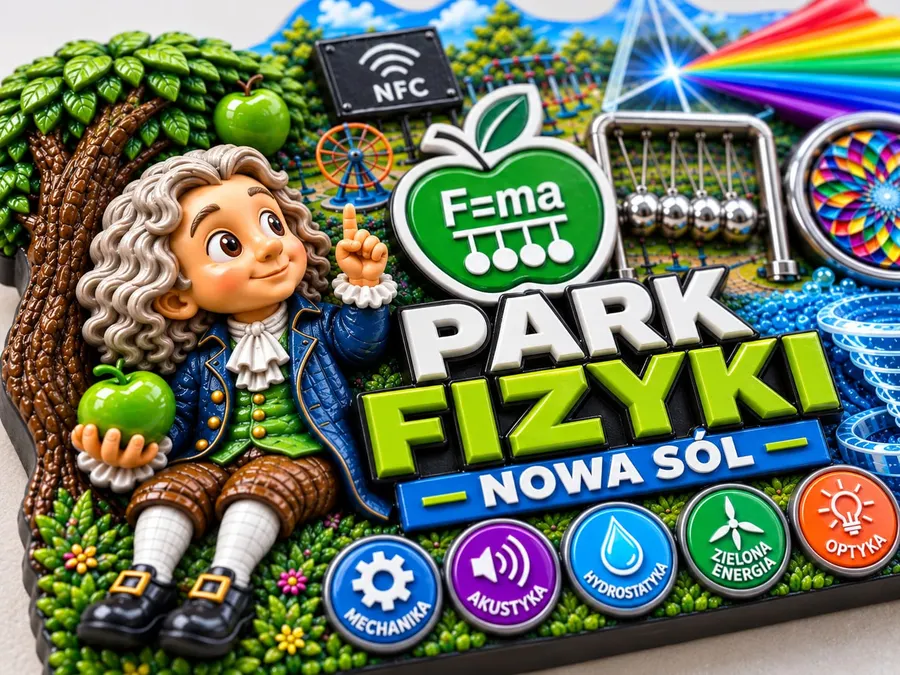
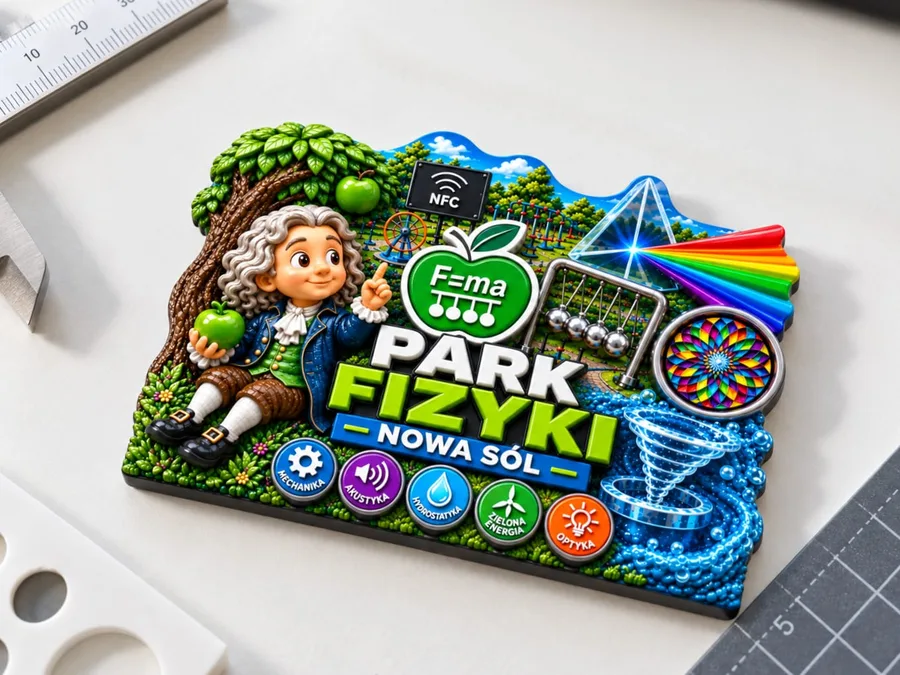
Educational venues, more often than other clients, want the souvenir to lead somewhere – to a website, teacher materials or workshop sign-ups. An address printed in the relief always works and costs nothing. An NFC chip shortens the path to a single tap; at Park Fizyki the marker is written into the scene rather than stuck on.
The two uses follow different logic. A shelf souvenir has to appeal to a child and fit into pocket money. A group gift is made in larger runs, often with an occasion or a date, and more often goes to an adult. One design can serve both, but it is worth knowing before the drawing starts.
First, architectural detail has to be simplified before it starts to hurt. The Centrum Nauki Keplera building has dense window divisions that would blur into one surface at hand size – the mass, cornices and frames stayed in the relief, the rest went into the print.
Second, a face forgives the least. We model the patron’s portrait separately and shallower than the architecture, so the features stay readable and light does not cast shadows in the wrong places. The same relief depth as the building would make the face look distorted.
Third, a symbol works faster than a view. Five badges naming fields of physics on the Park Fizyki magnet say more about the park’s offer than any panorama of the grounds – and do it in half a second, before anyone reads the name.
All three conclusions come down to one question we ask with every design for an educational venue: what exactly should stay in someone’s head after they get home.
Each of them tells the story of what it shows differently – and that decides whether an exhibit, a person or a symbol of a field ends up on the magnet.
This list cannot be closed – there are more educational venues than types anyone could name. With each one we work the same way: first we decide which exhibit or which figure will carry the rest of the design.