A mascot built in its own silhouette
FOR SPORTS CLUBS
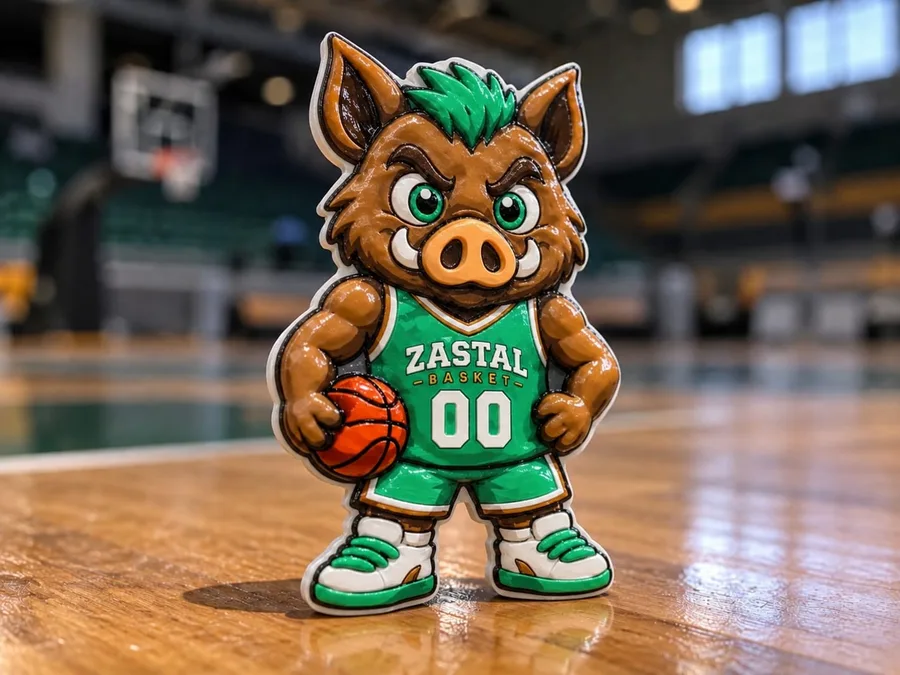
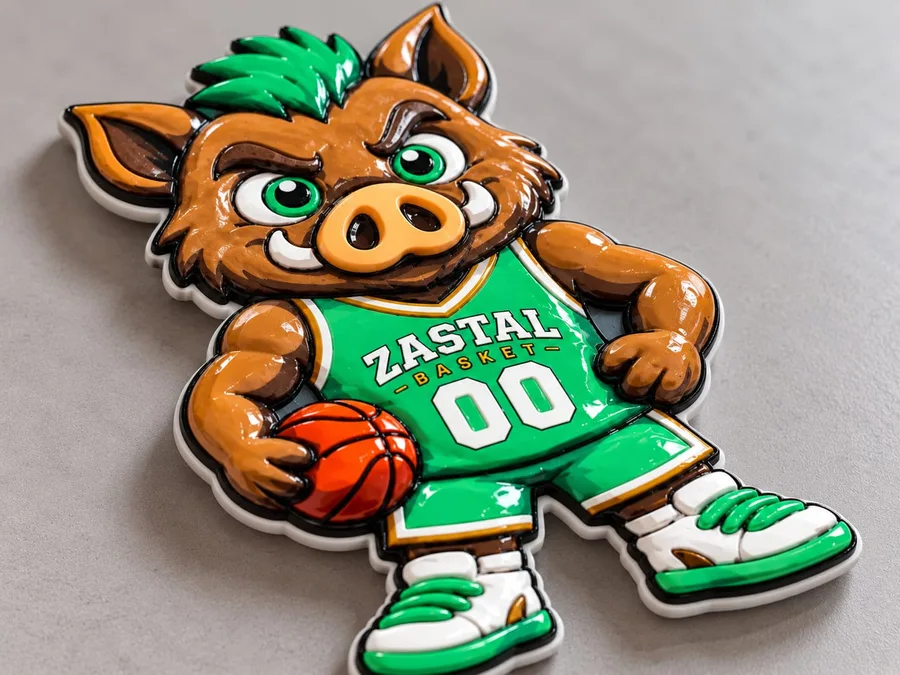
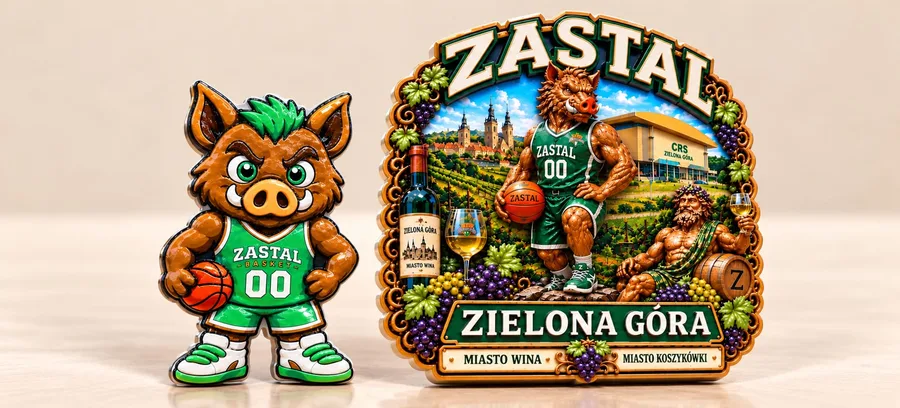
For a real supporter a souvenir is not a trinket but the next exhibit in a collection, next to the scarf from a first away game and the ticket from a match people still talk about years later. We design 3D magnets that earn that place: colours true to the brand book, a three-dimensional crest and a mascot built in its own silhouette.
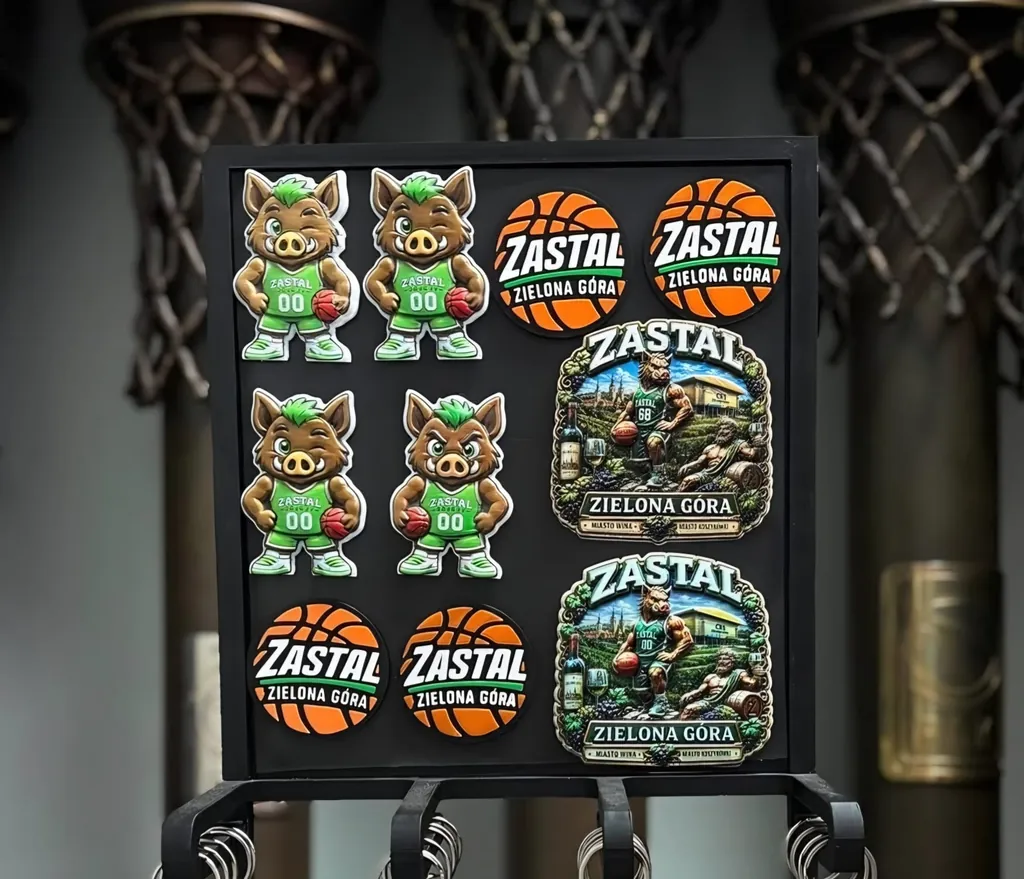
The technology itself - the relief, the UV print and how an order runs - is covered on the 3D UV magnets page. Projects for other kinds of sites are collected in our portfolio.
At a zoo, in a park or in a town the souvenir is bought by someone who is there for the first and usually the last time. At a club the same person stands at the counter every couple of weeks, through a whole round and through the seasons that follow. It is the only category with repeat demand from the same people – and that is what changes three things.
A souvenir from an attraction has one chance to sell. A club design has a dozen or more per season, provided there is a reason to come back each time. So a series works differently here than anywhere else: it is not about choosing between designs at the shelf, but about a collection built over years.
A supporter knows their own shade of green better than anyone on our side. A deviation nobody would notice on an animal’s fur is spotted at once in club colours, and gets talked about louder than the design itself. That is why we show the colours on the visualisation before production, not after it.
A club shop lives on match days, and the peak falls in the few dozen minutes before tip-off and at half-time. The stock has to stand in the arena, not in a warehouse, and it has to last that match – because afterwards nobody orders a delivery for tomorrow. That shifts the conversation from “which design” to “how many and by when”.
The squad changes, the coach changes, the table changes. These four questions settle what is left of the design when everything around it has moved.
The mascot has a face and reaches furthest – children, families, the away supporter. The crest is a mark of identity and works on those who have been with the club for years. Colours alone in an outline are the simplest option, but they say nothing to anyone who does not follow the league.
The name and number of a particular player sell superbly for one season, and stay on the shelf after the transfer. The Zastal mascot wears “00” on the shirt – a number nobody has – so the same design keeps working after every change of squad. A design with a name makes sense only as a closed edition, planned in advance.
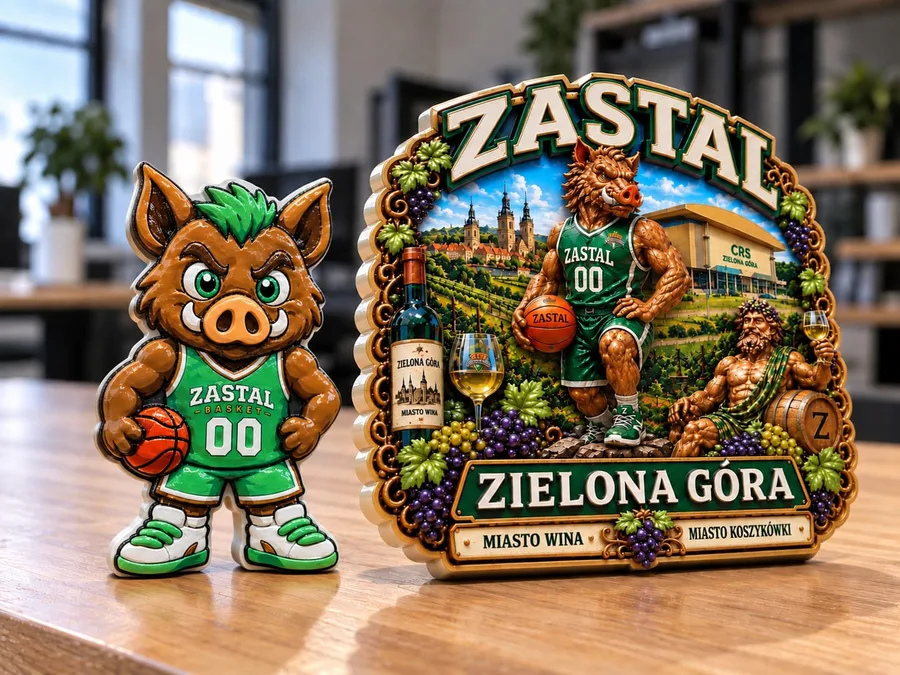
A club is sometimes the most recognisable brand a town has, and then the magnet stops being a supporter’s item. The second Zastal design joins the two: the CRS hall, rows of vines, Bacchus and a board reading “city of wine, city of basketball”. That magnet sells outside the arena, all year round – much like magnets ordered by cities and municipalities.
Part of the run almost always goes outside retail: to sponsor boxes, into partner packages, to meetings with the youth sections. That recipient looks at the design differently than a supporter in the queue – it has to be presentable and easy to hand over. Splitting the run between those two uses is worth doing before the artwork starts.
First, an outline following the figure turns the magnet into a figurine. The shape of the Zastal mascot is set in the model and runs along its contour – between the legs, around the shoes and over the spikes of the mane – so on a fridge door it does not look like a sticker boxed in a frame, but like a character standing there.
Second, a number that belongs to nobody adds several seasons to the life of the design. The “00” on the shirt is not any player’s, so the same magnet sells after transfers, after a change of coach and after a change of kit supplier. It is a small design decision that decides whether the run goes in a year or in three.
Third, one club can serve two entirely different shelves. The mascot goes to the shop by the arena, while the design with the CRS hall, the vineyard and the board reading “city of wine, city of basketball” reaches people who never came to a match. The same mark, two selling contexts and two different moments in the year.
All three come down to one question we ask at the start of a club order: is this design meant to last one season or several. The answer settles the number on the shirt, the names on it, and how many pieces are worth ordering the first time.
What separates them is who stands on the other side of the counter – and that decides whether the design has to draw a supporter, a competitor or a guest invited by the club.
Clubs and venues with a loyal audience do not fit into five bullet points. If yours is not here, let us start from a single number: how many people pass the shop on a match day.