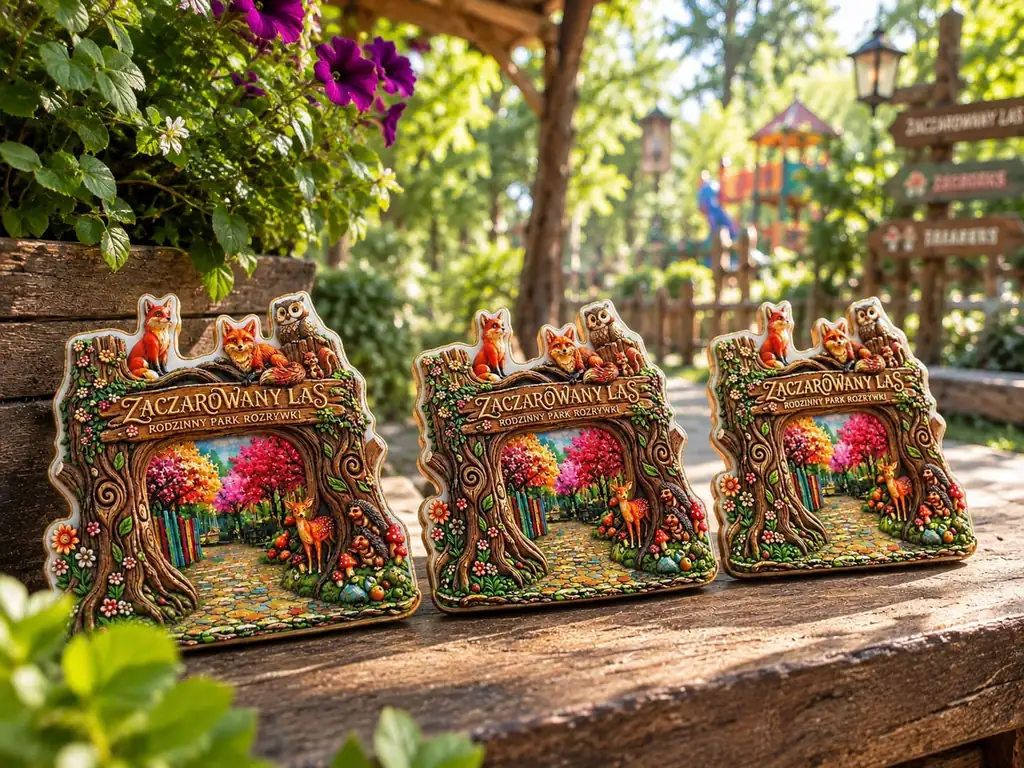
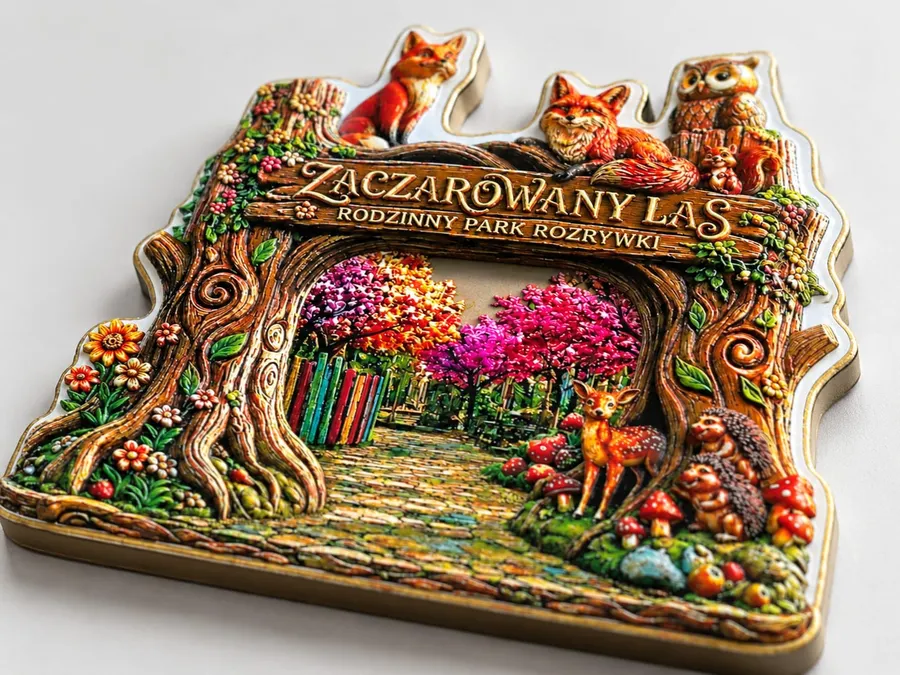
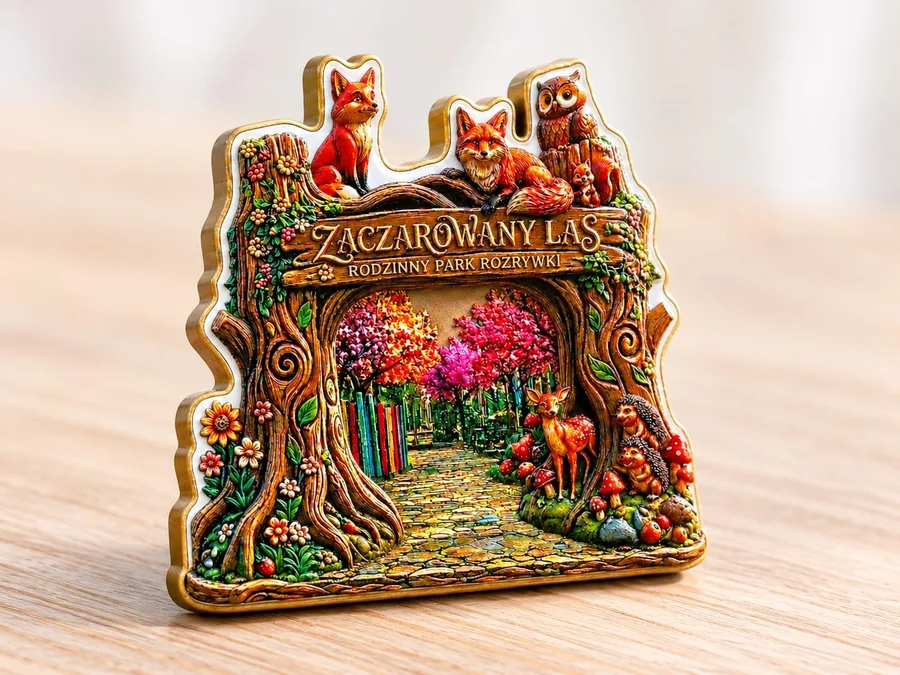
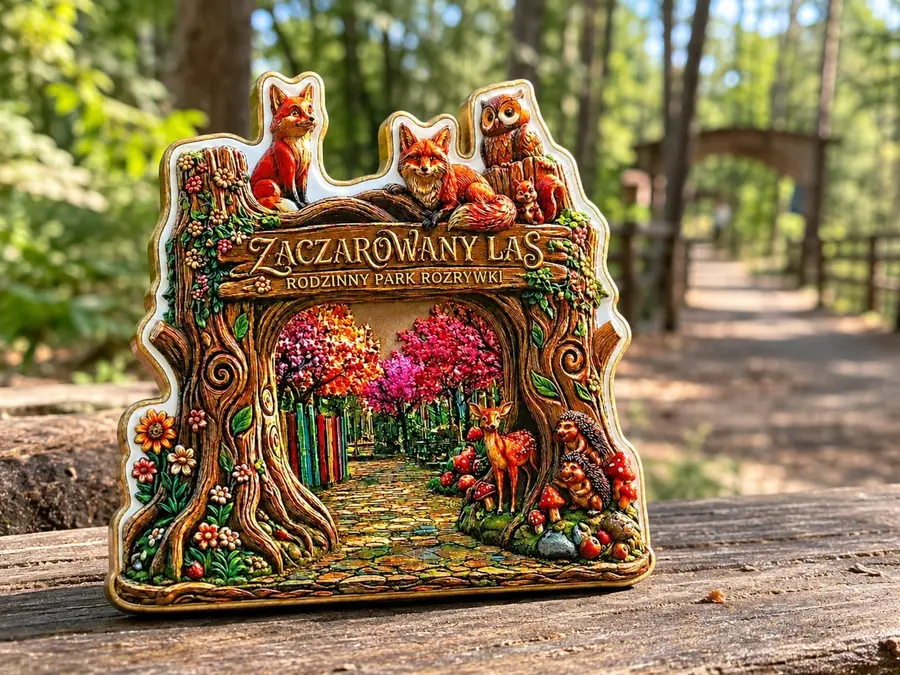
A gate of roots as a frame
FOR THEME PARKS AND FAMILY ATTRACTIONS
We design souvenirs for places where families spend half a day. A mascot, an entrance gate or a flagship attraction in a tactile relief – a design a child recognises from the other side of the counter.
We write about the technology itself - the relief, the UV print and how an order runs - on the 3D UV magnets page. Projects for other kinds of sites are collected in our portfolio.
In a museum or a castle a souvenir is bought at the end of the visit, as a separate intention. In a theme park the money for a magnet comes from the same pocket as ice cream, candy floss and a ride – and competes with them in the same minute. That changes three things in the design.
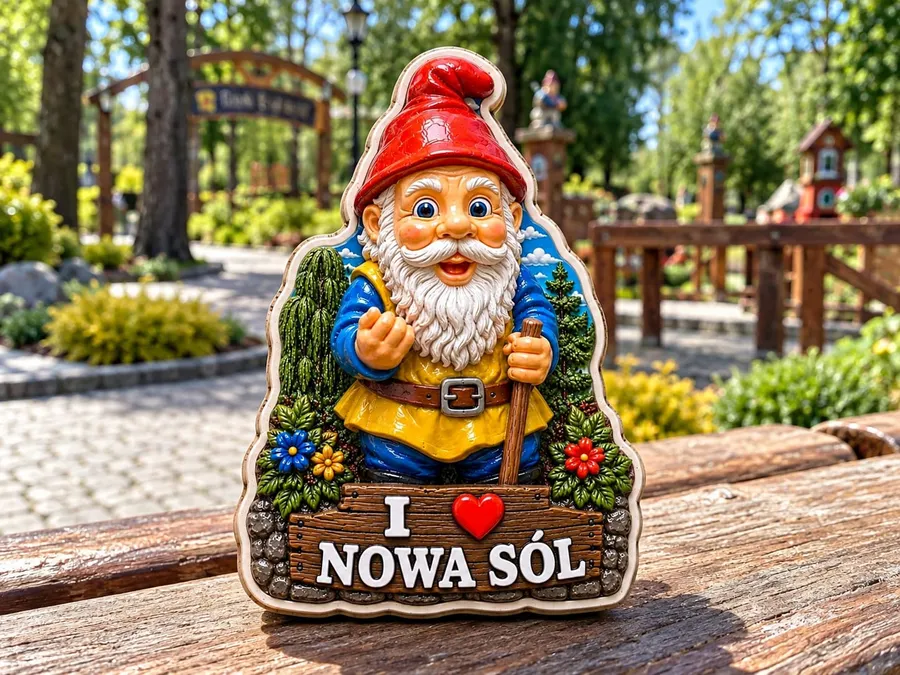
A family comes to the counter tired and already heading for the exit. The design has to be recognised at arm’s length, before anyone reads the lettering. That is why the character takes up most of the frame and the surroundings step back instead of competing with it.
A park rarely has one panorama that fits on seven centimetres. It does have a character with a queue of people waiting to be photographed with it. That is what comes home from the trip – a view of the paths does not. If a park has a mascot, the design starts there.
From a park you take home a day, not a point on a map. The design works better when it shows a scene: the gate you came through, or the character a child stood next to for a photo. The name of the place should confirm the memory rather than replace it – which is why we usually put it on a sign underneath.
None of them has a single right answer. Each one changes the design itself, not just its colour – which is why they are worth settling before we start drawing.
A mascot sells the most broadly, because it has a face and works on the youngest. An entrance gate works like a frame: it closes the scene and says where you went in. A flagship attraction – a record-breaking figure, a slide, a train – reaches those who came for it.
A park divided into zones can have a separate design for each. A visitor who has been to three of them then has a reason to take three magnets. With a single design the whole sale rests on one decision – yes or no.
The basic design stays on the shelf all year. Next to it there is room for a short edition: a park anniversary, a new attraction, the summer holidays. A short run does not push out the permanent design – it gives a reason for a second purchase to someone who already owns the first.
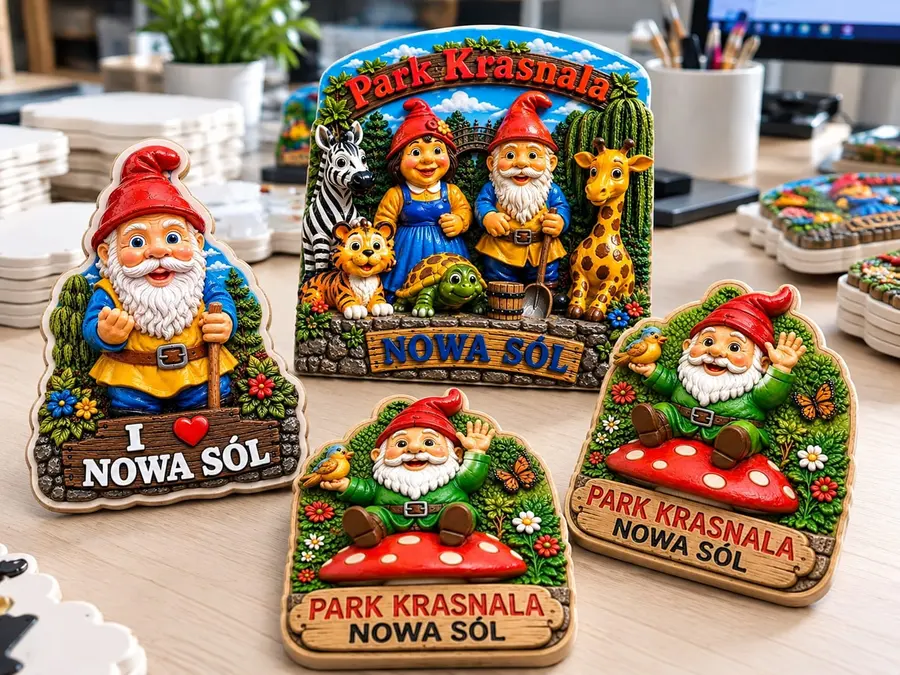
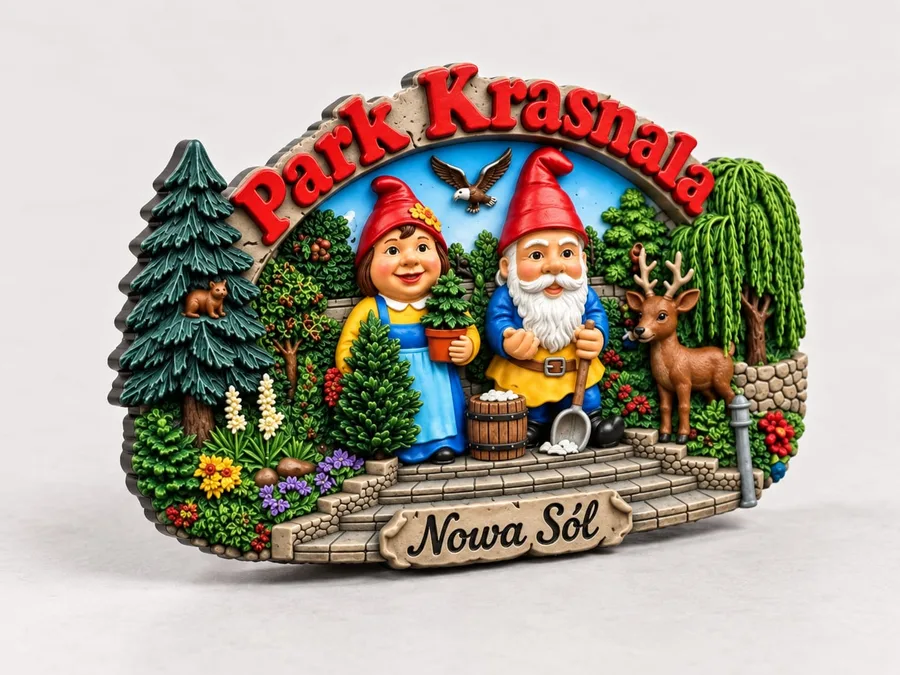
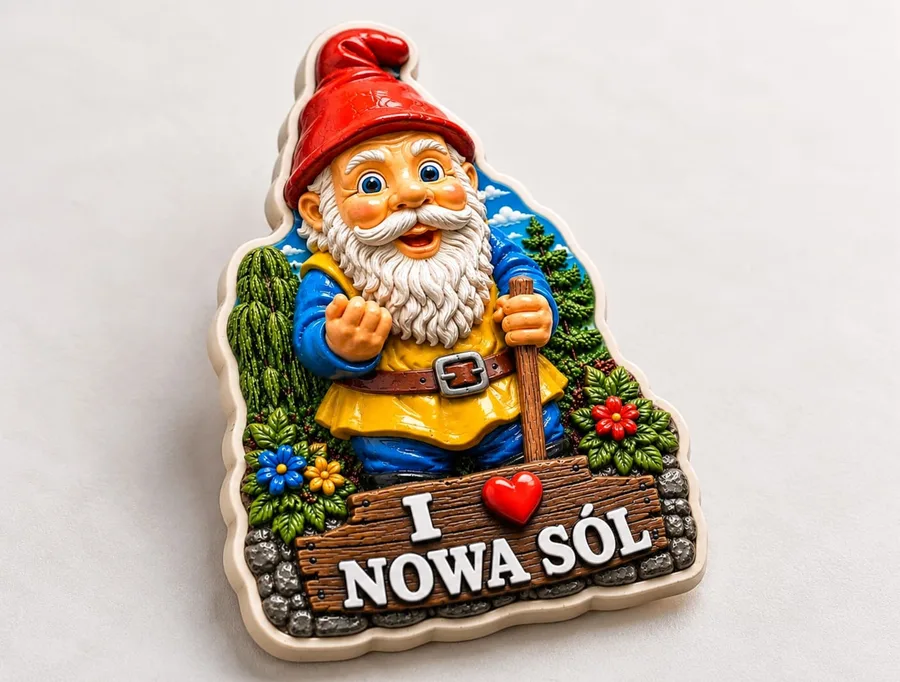
The same character looks different in an elaborate scene and in a small design shaped as the figure itself. Two formats side by side cover two different budgets, while only one character is designed. In Park Krasnala those two formats sit on the shelf together.
First, the character matters more than the lettering. In both projects the character takes up most of the design – gnomes or forest animals. The park name sits on a sign underneath and does not take space away from it.
Second, the outline does half the work. A magnet shaped as the figure itself looks like a figurine, not like a tile with a photo. The same design closed in a rectangle loses much of the effect, despite an identical relief and print.
Third, a series sells differently from a single design. Four designs for one park change the question at the counter: from “buy or not” to “which one”. The second question ends in a purchase far more often.
These three conclusions came back regardless of whether the park charges admission or is open to everyone. What changes is the number of visitors, not the way they choose a souvenir.
This segment is wider than theme parks alone. They share one thing: people come for a few hours, with children, and leave past a point of sale.
There are more family attractions than types on this list. If yours is not here, the same question settles it: what do visitors photograph just before they leave.